
Nutraceutical Contract Manufacturing: How It Works and What It Costs
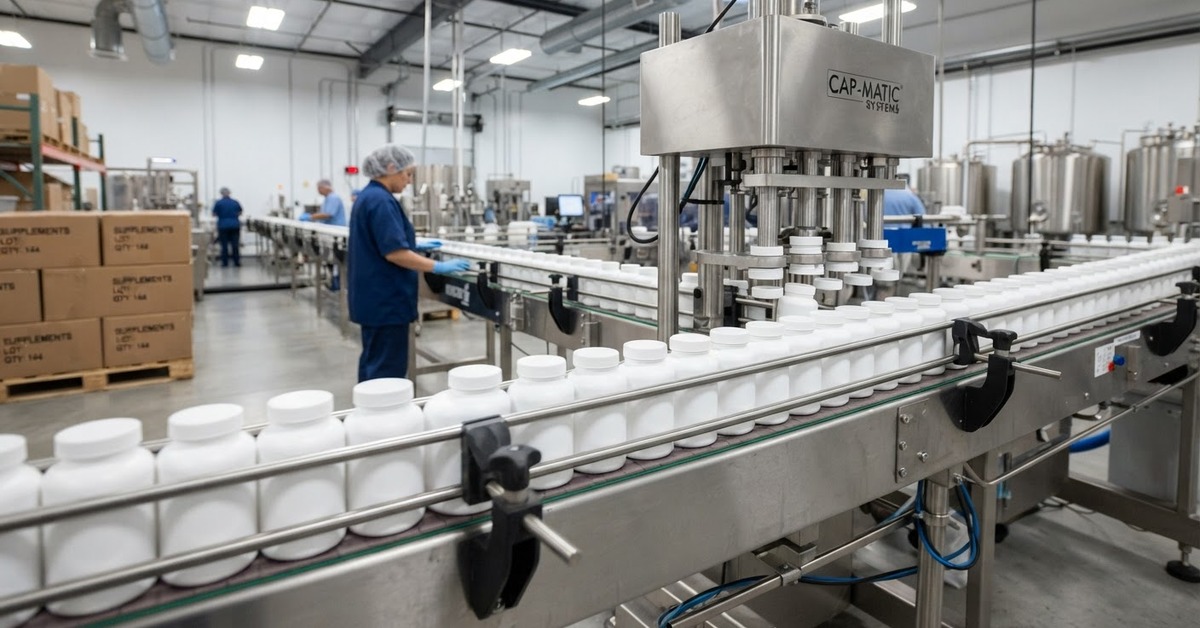
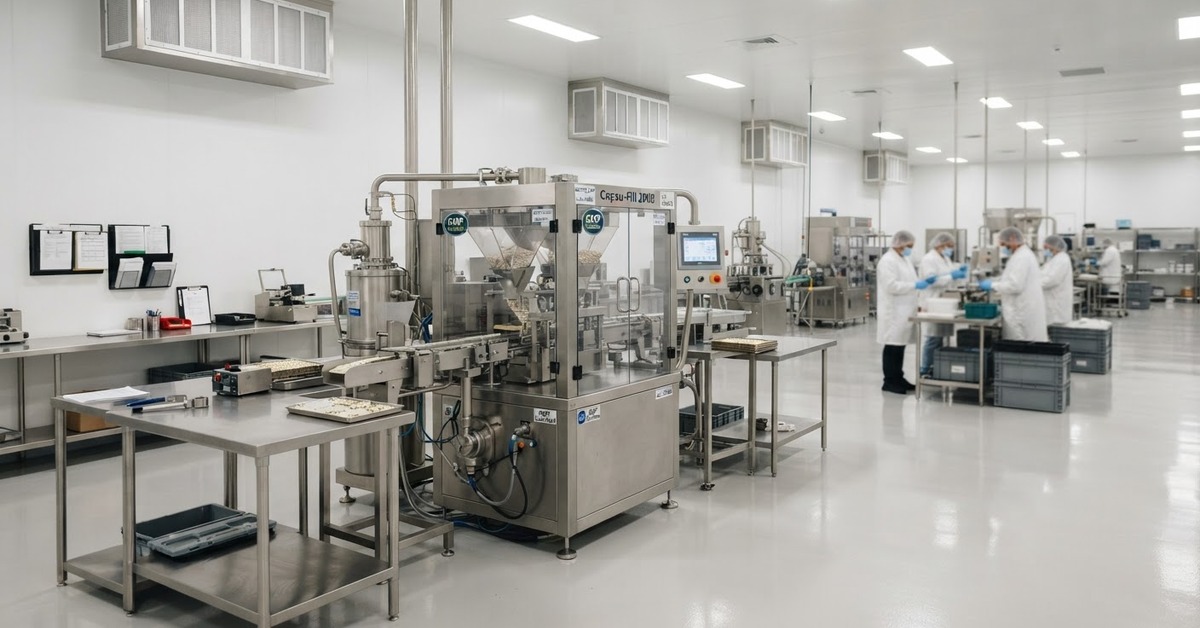
Nutraceutical contract manufacturing is an arrangement where an outside factory formulates, produces and packs supplement products that carry your brand. Instead of building a plant, hiring a production team and holding your own certifications, you work with a partner who already has the capacity. For most new and mid-size brands, that is the only realistic route to market.
The value of nutraceutical contract manufacturing is not just rental of equipment. It is access to formulation know-how, quality systems, sourcing and packaging in one place. This guide explains how the process runs, what a good partner brings, and which factors actually move the price.
What does a nutraceutical contract manufacturer do?
A contract manufacturer can take on any part of the product journey:
- Formulation and development of a custom formula, or adaptation of a stock formula
- Ingredient sourcing and supplier qualification
- Production of the agreed dosage form
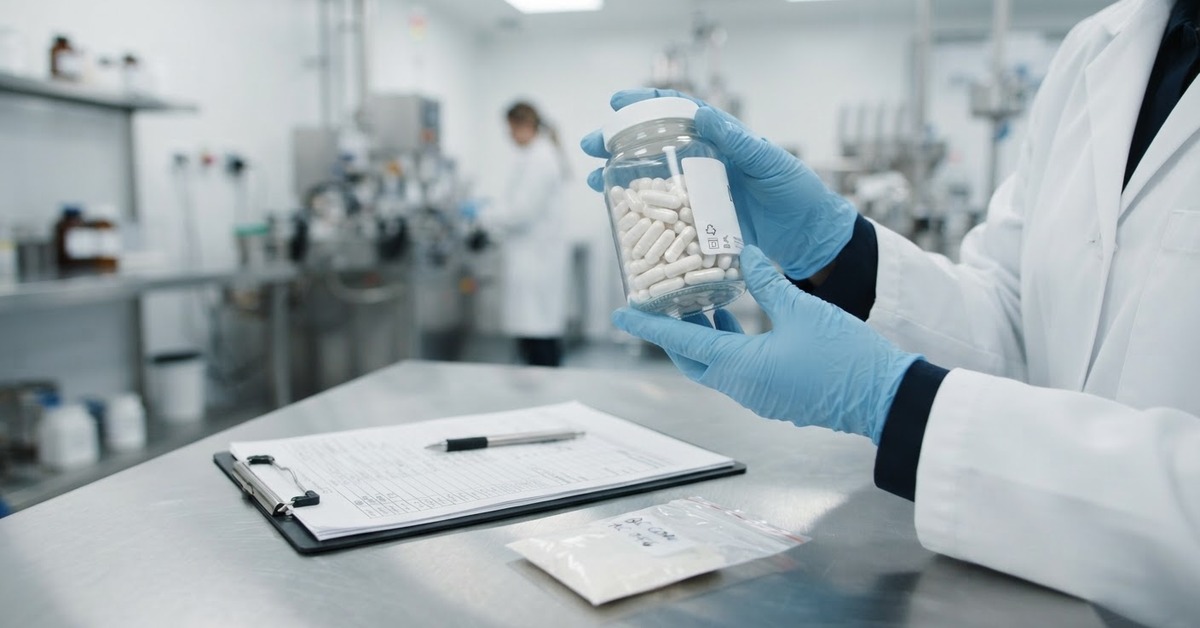
- Quality control and release testing
- Packaging into bottles, jars, pouches, sachets or stick packs
- Documentation such as specifications, COAs and certificates of free sale
- Logistics support for export and shipping
The split between your responsibilities and theirs is set by the contract. Some brands own the formula and hand over a finished recipe; others rely on the manufacturer to develop it.
From brief to shipment
Most nutraceutical manufacturing projects follow the same track:
- Brief and scoping. Dosage form, actives, target market, claims and volumes are agreed. This is when feasibility is checked honestly.
- Formulation. The recipe is developed or adapted, with overages and excipients chosen for stability and taste.
- Sampling. Prototype samples are made and refined with your feedback on taste, texture and appearance.
- Quotation. Once the formula is fixed, packaging and testing are costed into a per-unit price.
- Documentation. Artwork, specifications and any regulatory paperwork are finalised.
- Production. Materials are ordered, the batch is run, and in-process checks are recorded.
- Release and shipping. Finished testing, COA and release, then packing and dispatch.
Lead time usually starts after both the formula and the artwork are approved, not at the first email.
Contract manufacturing vs private label vs turnkey
These terms overlap, and mixing them up causes delays:
- Private label means selecting a ready formula and applying your brand. Fast and cheap, but not unique.
- Contract manufacturing means the factory produces to a specification, which may be yours or one they developed for you.
- Turnkey manufacturing bundles formula, packaging, artwork and sometimes regulatory support into one managed service.
If you need a defensible product, contract manufacturing with a custom formula is the usual choice. If you need speed and low cost, private label gets you to market first.
Nutraceutical contract manufacturing specifications
Reference parameters from a Guangzhou-based GMP-certified facility:
| Item | Typical specification |
|---|---|
| Dosage forms | Powder, capsule, softgel, gummy, tablet, liquid drops, stick pack |
| Formula route | Custom development or stock private label |
| MOQ | 5,000 bottles / 20,000 gummies / 3,000 jars / 25 kg bulk per SKU |
| Lead time | 4-6 weeks; gummies 5-7 weeks after approval |
| Certifications | GMP, cGMP, FDA, NSF, HACCP, ISO 22000 |
| Testing | Potency, microbiology, heavy metals, stability |
| Packaging | Bottle, jar, pouch, sachet, stick pack, blister |
| Services | Formulation, sourcing, production, packing, documentation |
What drives contract manufacturing cost
The unit price is built from a handful of levers:
- Actives. Branded, chelated, liposomal or high-dose ingredients are the single largest variable.
- Dosage form. Gummies and softgels cost more to run than capsules and tablets; liquids need careful preservation.
- Volume. Higher MOQ spreads setup, cleaning and testing over more units.
- Packaging. Bottle, closure, label and carton minimums often surprise first-time buyers.
- Testing and documentation. Release tests and any market-specific paperwork add cost but protect the brand.
- Flavour and finish. Natural flavour, sugar-free systems and premium textures raise the price.
A quote is only meaningful when it is paired with the formula, packaging and testing it assumes. Comparing headline numbers without those details leads to wrong decisions.
Why brands use a contract manufacturer
- No capital outlay on equipment, premises or certifications
- Faster launch, since capacity and know-how already exist
- Lower risk, because quality systems and supplier networks are proven
- Scalability, from first run to full volume on the same lines
- Access to formats you could not run in-house, such as gummies or softgels
The trade-off is dependence on the partner. That is why evaluation matters as much as price.
Documentation and compliance
Contract manufacturing produces a paper trail as well as a product. A well-run project generates:
- A product specification defining actives, excipients and finished properties
- A certificate of analysis for each released batch
- Batch records showing what was weighed, blended and tested
- Traceability records linking ingredients back to suppliers
- Stability data supporting the shelf life claimed
- Certificates of free sale or similar export documents when required
For regulated markets this documentation is not optional. Importers and retailers ask for it before they will list a product, and a missing COA can stop a shipment. Choosing a partner that treats documentation as routine, rather than a favour, saves weeks later.
Where brands lose time
Most project delays come from a handful of avoidable causes:
- Late artwork. Lead time starts after approval, so unresolved labels push everything back.
- Formula changes after sampling. Each change reopens testing and sampling.
- Unclear claims. Claims that need substantiation take longer to clear.
- Packaging minimums discovered late. The chosen jar or carton often sits on a longer lead time than the product itself.
- Undecided MOQ. Volume affects purchasing and scheduling.
Resolving these up front compresses the schedule more than any pressure on the factory.
How to evaluate a partner
- Certification scope. Check GMP, ISO 22000 or HACCP on the certificate, and confirm which lines are covered.
- Formulation capability. Ask who owns the formula and whether you can take it elsewhere later.
- Sample quality. Judge on taste, texture and stability, not on a spec sheet alone.
- MOQ and scalability. Confirm the same site can scale with you.
- Documentation. Request a COA template and specification during evaluation.
- Communication. One accountable contact with reliable response times.
Start a contract manufacturing project
ZOOMSHEAL Health is a GMP-certified contract manufacturer in Guangzhou with 23 years of OEM experience since 2003. We run custom formulation and private label across powders, capsules, softgels, gummies, tablets, drops and stick packs, with MOQ from 5,000 bottles and lead times from 4-6 weeks.