
1. What Is a Softgel Capsule?
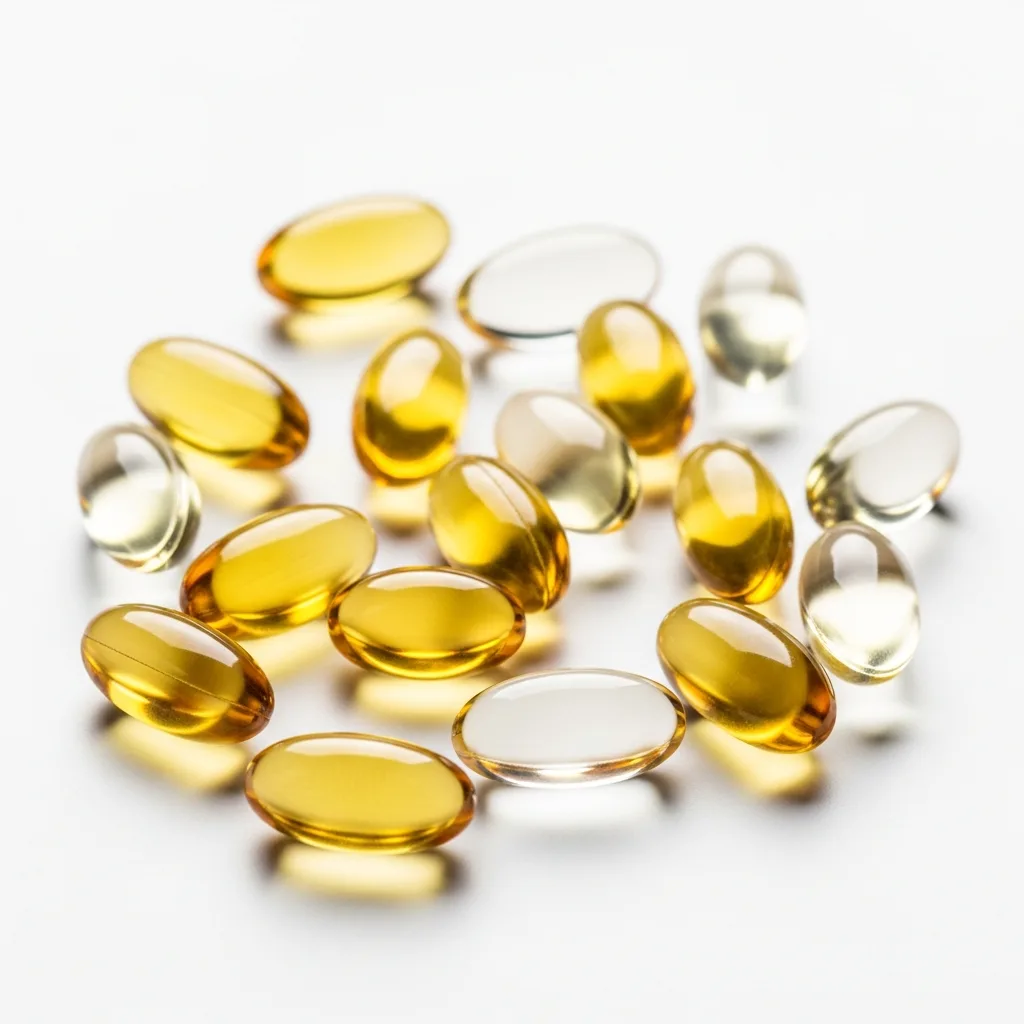
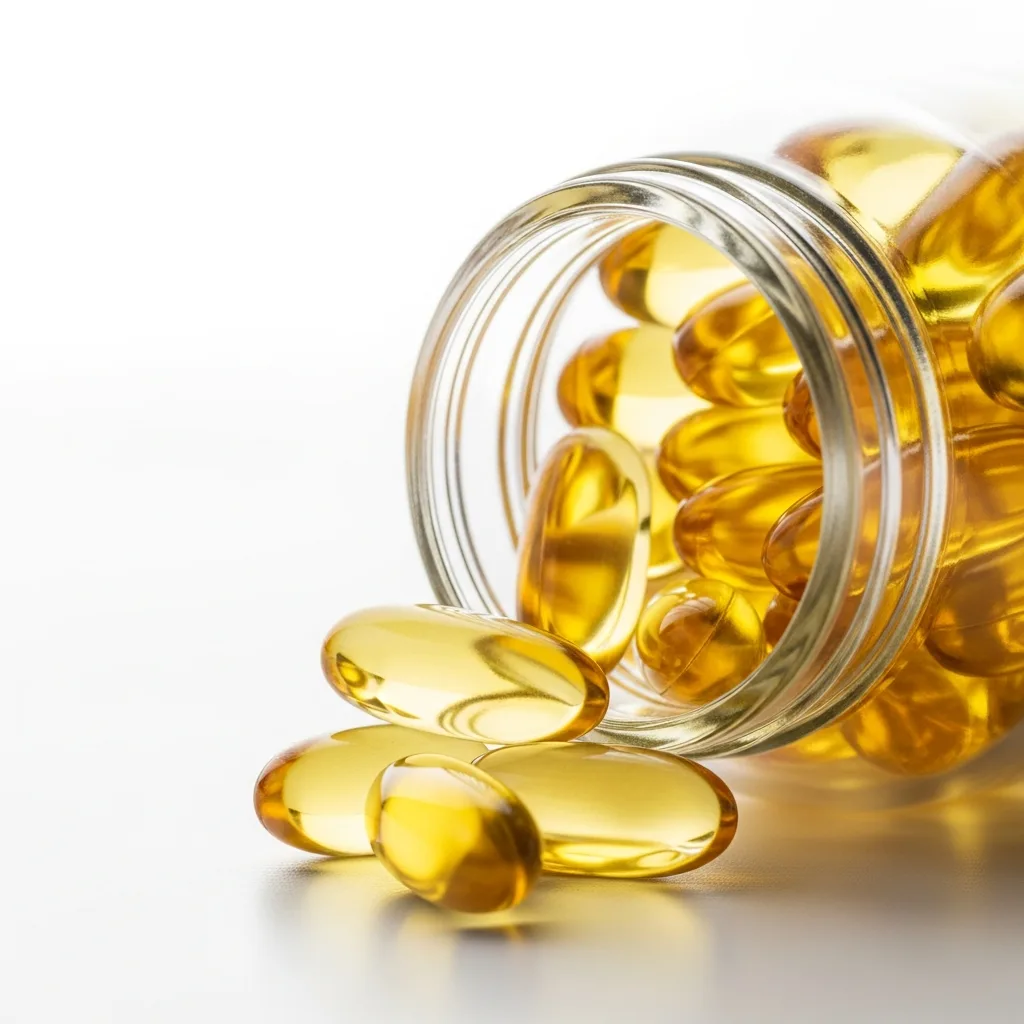
A softgel (soft gelatin capsule) is a single-piece, hermetically sealed capsule made from gelatin or plant-based polymers, filled with liquid or semi-liquid active ingredients. Unlike two-piece hard capsules (HPMC or gelatin), softgels are formed, filled, and sealed in a single continuous operation.
Key distinguishing characteristics of softgels:
- One-piece construction — No seams or locking mechanisms; the capsule is formed around the fill material
- Liquid fill — Only compatible with liquid, suspension, or paste formulations
- Hermetic seal — Air-tight, oxygen-impermeable, and tamper-evident
- Custom shapes and colors — Round, oval, oblong, tube-shaped; single or two-tone color combinations
- Printing capability — Brand logos, dosage, or lot numbers can be printed directly on the shell
Softgels occupy a unique position in the supplement market: they command a premium price compared to tablets and hard capsules (typically 20-40% higher), yet consumers perceive them as higher quality and more effective due to faster absorption and easier swallowing.
2. Why Choose Softgel as a Delivery System?
Understanding the advantages and limitations of softgels helps brand owners decide whether this dosage form fits their product strategy.
Advantages
| Advantage | Explanation | Impact |
|---|---|---|
| Higher Bioavailability | The liquid fill is absorbed faster than solid dosage forms because it does not need to disintegrate in the digestive tract | Faster onset of action; lower dosage required for same effect |
| Precise, Consistent Dosage | Each capsule is filled by a precision pump with ±1% accuracy | Batch uniformity; regulatory compliance |
| Oxygen Protection | The sealed gelatin shell prevents oxygen contact with the fill | Extended shelf life for oxidation-sensitive ingredients (fish oil, CoQ10, astaxanthin, vitamin E) |
| Light Protection | Opaque gelatin formulations block UV light | Preserves light-sensitive ingredients (vitamin D, vitamin A, certain carotenoids) |
| Taste & Odor Masking | The shell completely separates the fill from taste receptors and olfactory senses | Better compliance for strong-tasting ingredients (fish oil, garlic, herbal extracts) |
| Ease of Swallowing | Smooth, lubricated surface; oval shape designed for swallowing | Higher consumer compliance, especially among elderly populations |
| Tamper Evidence | Cannot be opened and resealed without visible damage | Product integrity; consumer safety |
| Brand Differentiation | Available in custom shapes, sizes, and colors | Shelf stand-out; brand recognition |
Limitations
- Not suitable for dry or high-dose powders — The fill must remain liquid or semi-liquid
- Higher manufacturing cost — More complex process than tablets or hard capsules
- Higher MOQ — Typically 50,000-200,000 capsules minimum
- Temperature sensitivity — Softgels can deform or stick together in high heat
- Moisture sensitivity — Humidity control required during storage
- Limited ingredient compatibility — Water-sensitive ingredients need special handling; some ingredients interact with gelatin (aldehydes, reducing sugars)
3. Softgel Market Overview & Trends
The global softgel capsule market is projected to grow from approximately $8.2 billion in 2024 to $12.6 billion by 2032, at a CAGR of 5.5%. Key market drivers include:
- Aging population — Increased demand for joint health, heart health, and cognitive supplements in softgel format
- Fish oil and omega-3 growth — Softgels are the preferred delivery format for omega-3 supplements, a category growing at 8% annually
- Pet supplement expansion — Softgel-formulated pet supplements (fish oil, joint health) are a rapidly growing niche
- Novel ingredient delivery — Liposomal, self-emulsifying, and other enhanced delivery systems are increasingly available in softgel format
- Geographic expansion — Asia-Pacific is the fastest-growing region, driven by increasing disposable income and health awareness
For softgel manufacturers, these trends translate to growing demand for production capacity, especially from brands targeting the nutraceutical and cosmeceutical markets.
4. Raw Materials for Softgel Production
4.1 Shell Materials
The softgel shell is a complex formulation of several components:
| Component | Function | Typical Concentration |
|---|---|---|
| Gelatin | Structural polymer; provides strength, elasticity, and film-forming ability | 35-50% of dry shell weight |
| Plasticizer | Adds flexibility and prevents brittleness (glycerin, sorbitol, propylene glycol) | 15-30% |
| Water | Processing medium; facilitates gel formation | 20-40% (reduced during drying) |
| Opacifier | Provides opacity for light protection (titanium dioxide) | 0-2% |
| Colorant | Brand identity; product differentiation (FD&C dyes, natural pigments) | 0-0.5% |
| Preservative | Prevents microbial growth (methylparaben, propylparaben) | 0-0.2% |
Gelatin Types Used in Softgels:
- Type A (porcine/pork skin): Bloom strength 150-250; most cost-effective; common in non-religious-restricted markets
- Type B (bovine hide/bones): Bloom strength 150-280; preferred for halal and kosher products; higher cost
- Fish gelatin: Lower bloom strength (100-200); used for kosher/fish-based products; lower gel strength requires processing adjustments
Vegetarian/Plant-Based Alternatives: While the term "softgel" traditionally implies gelatin, plant-based alternatives exist:
- Starch-based: Modified starches with plasticizers; different processing parameters; less elastic than gelatin
- Carrageenan: Seaweed extract; combined with starch or cellulose for structure
- HPMC (hydroxypropyl methylcellulose): Requires different manufacturing approach; typically used for two-piece capsules
Note: Plant-based softgels require specialized equipment and are not available from all softgel manufacturers.
4.2 Fill Materials
The liquid fill for softgels can be categorized into three main types:
- Oil-based fills: The most common type. Includes fish oil, vegetable oils (MCT, flaxseed, borage), oil-soluble vitamins (A, D, E, K), CoQ10, astaxanthin, and essential oils. These are naturally compatible with gelatin shells because they do not extract water from the shell.
- Suspension fills: Oil-based suspensions of insoluble ingredients (e.g., calcium carbonate, herbal powders, probiotics in oil). Requires rigorous mixing and particle size control to prevent sedimentation.
- Water-in-oil emulsions: Used for ingredients that need water for dissolution (e.g., certain B vitamins, minerals). The water phase is emulsified into the oil phase to prevent water migration into the shell.
- Thixotropic gels: Semi-solid formulations that liquefy under shear stress during filling but regain structure after encapsulation.
Critical fill material properties:
- Viscosity: 100-20,000 cP (centipoise) — must flow under pressure but not leak from the die
- Water activity (aw): Below 0.6 to prevent water migration into the gelatin shell
- pH: 4.0-7.5 — extreme pH values degrade gelatin
- Particle size (for suspensions): Below 100 mesh (149 microns) to prevent nozzle clogging
5. The Complete Softgel Manufacturing Process
The softgel manufacturing process consists of seven main stages. Each stage requires precise control of multiple parameters for consistent, high-quality output.
Stage 1: Gelatin Mass Preparation
Equipment: Stainless steel jacketed tanks with vacuum deaeration, temperature-controlled heating, and high-shear mixing
Process steps:
- Weighing: Gelatin, plasticizer, water, and additives are weighed according to the master batch formula
- Hydration: Gelatin is allowed to hydrate in water for 30-60 minutes at room temperature to swell the particles
- Heating and Dissolution: The mixture is heated to 60-70°C with gentle agitation until all gelatin is fully dissolved (typically 60-120 minutes)
- Addition of Additives: Colorants, opacifiers, and preservatives are added in solution form and mixed thoroughly
- Deaeration: The molten gelatin mass is subjected to vacuum (typically 25-30 inHg) for 30-60 minutes to remove all dissolved and entrained air. Air bubbles in the shell cause weak spots, visual defects, and potential leakers.
- Filtration: The finished gelatin mass is filtered through 100-200 mesh screens to remove any undissolved particles.
- Hold: The gelatin mass is held at 55-65°C until ready for use. Maximum hold time is typically 24-48 hours before quality degrades.
Critical parameters:
- Viscosity: 10,000-30,000 cP at 60°C (measured by Brookfield viscometer)
- Moisture content: 30-40% (before drying)
- pH: 5.0-6.5 (gelatin's isoelectric point affects gel strength)
Stage 2: Fill Preparation
Equipment: Stainless steel mixing tanks with high-shear homogenizers, heating jackets (for oil-based fills), and vacuum deaeration
Process steps:
- Weighing: All fill ingredients are weighed per the master formula
- Mixing and Homogenization: Ingredients are blended at controlled temperatures. For suspensions, high-shear homogenization ensures even particle distribution.
- Deaeration: Vacuum is applied to remove air bubbles that would create fill weight inconsistencies
- Filtration: The fill is passed through screens (typically 60-100 mesh) to remove agglomerates or impurities
- Hold and Transfer: The fill is transferred to the encapsulation machine through heated hoses and held at the required temperature
Stage 3: Encapsulation (Rotary Die Process)
The rotary die encapsulation method is the industry standard, accounting for over 95% of commercial softgel manufacturing. This process was invented in 1933 by Robert P. Scherer and has been refined continually since then.
Equipment: Rotary die encapsulation machine (RDM), consisting of:
- Two gelatin casting boxes with adjustable knife assemblies
- Two chilled rotating drums (casting drums)
- Gelatin ribbon guides and lubrication rollers
- Two rotating die rolls with capsule-shaped cavities
- Fill metering pump system (piston or gear pump)
- Thermostatically controlled wedge
- Discharge conveyor
Detailed process flow:
-
Gelatin Ribbon Casting: Molten gelatin from the hold tank flows into a heated casting box. The box has an adjustable slot (knife gap) at the bottom, typically set to 0.020-0.045 inches (0.5-1.1 mm). Gelatin flows through this slot onto a chilled rotating drum (8-16°C). As the drum rotates, the gelatin solidifies into a continuous ribbon of uniform thickness. The ribbon is peeled off the drum and lightly lubricated with mineral oil to prevent sticking during die roll contact.
-
Ribbon Transport: Two ribbons — one from each casting drum — are fed between the matching die rolls. Tension rollers maintain uniform ribbon tension. Gelatin ribbon speed must be precisely synchronized with die roll rotation speed.
-
Die Roll Operation: Two die rolls, each containing capsule-shaped cavities, rotate in opposite directions at identical speeds (typically 3-15 RPM depending on capsule size and machine type). The cavities on each die roll align precisely with their counterparts on the opposite roll. As the ribbons enter between the closing die rolls, the dies press the outer edges together, forming a continuous series of interconnected capsule pockets.
-
Filling: As the die rolls close, a wedge (heated to 37-40°C) is positioned between the two ribbons, just ahead of the die closing point. A fill pump — typically a multi-piston metering pump synchronized with the die roll rotation — injects the precise volume of liquid fill through nozzles in the wedge into each capsule pocket as it forms. The fill volume is adjustable from 0.1 mL to over 1 mL depending on capsule size.
-
Sealing: Immediately after filling, the die rolls complete their rotation, pressing the two gelatin ribbons together around the filled pocket. The heat from the wedge and pressure from the dies creates a hermetic seal. The seal temperature (typically 37-42°C) and pressure must be precisely balanced — too low results in leakers, too high causes gelatin degradation.
-
Capsule Ejection: The formed capsules remain in the die roll cavities as they rotate past the bottom dead center, where they drop onto a discharge conveyor. Any residual gelatin web (the ribbon material between capsules) is removed as scrap.
Encapsulation machine throughput:
- Small machines (lab scale): 10,000-30,000 capsules/hour
- Mid-range production: 30,000-80,000 capsules/hour
- High-capacity production: 80,000-200,000+ capsules/hour
- Typical die roll sizes: #5 to #30 oval (3 to 30 minims fill volume)
Stage 4: Tumble Drying (Initial Drying)
Freshly encapsulated softgels are approximately 30-40% moisture by weight and too soft for handling. Immediate drying is essential.
Equipment: Perforated rotating tumble dryers with temperature and humidity control
Process:
- Capsules are gently tumbled in the dryer for 15-45 minutes
- Controlled airflow at 20-25°C, 30-40% RH removes surface moisture
- A light dusting of lubricant (typically a small amount of mineral oil or silicon dioxide) prevents sticking during subsequent tray drying
Stage 5: Tray Drying
Equipment: Drying tunnels or racks with temperature and humidity control; perforated trays (stainless steel or food-grade plastic)
Process:
- Capsules are spread in single layers on drying trays (typically 3-5 kg per tray for capsule size #20 oval)
- Trays are loaded into drying tunnels or rolling racks
- Drying conditions: 20-25°C, 30-40% RH, with continuous air circulation
- Drying duration: 24-72 hours depending on capsule size, shell thickness, and fill properties
- Critical: Capsules must be turned or rotated at regular intervals (every 2-4 hours during the first 12 hours) to ensure uniform moisture removal and prevent flat spots
- Target final moisture content: 6-10% by weight
Drying curve monitoring: Weight loss is tracked at regular intervals. A typical drying curve shows rapid moisture loss in the first 8-12 hours, followed by a gradual approach to equilibrium. Drying is complete when the weight loss rate falls below 0.1% per hour.
Stage 6: Inspection and Sorting
After drying, every capsule undergoes inspection before packaging. Softgel contract manufacturers typically employ a multi-tier QC process:
Level 1 — Automated Optical Inspection:
- High-speed vision systems inspect 100% of capsules at rates up to 60,000 capsules per hour per machine
- Defects detected: dents, cracks, surface contamination, seal imperfections, shape deformities, color variation, incomplete filling, leakers
- Rejection criteria are set during process validation; typical reject rate for well-controlled production is 0.1-0.5%
- Rejected capsules are diverted by air jet
Level 2 — Manual Visual Inspection:
- Trained operators inspect capsules on illuminated inspection belts
- Sampling frequency: Typically 10-30% of production, or as defined by AQL (Acceptable Quality Level) sampling plans
- Operator training and certification required per cGMP guidelines
Level 3 — QC Laboratory Testing:
- Weight check: Average fill weight ±1% of target; individual weights ±2% (per USP <698> for content uniformity)
- Disintegration: Must disintegrate within 30 minutes in simulated gastric fluid (per USP <701>)
- Shell moisture: 6-10% by loss-on-drying method
- Hardness/tensile strength: Measured by texture analyzer
- Seal integrity: Visual crack test under pressure; optional dye penetration test
Stage 7: Polishing, Coating, and Printing (Optional)
Polishing:
- Capsules are gently washed with ethanol or isopropyl alcohol in a perforated rotating drum to remove surface oil residue
- Dried with warm air (30-35°C) for 15-30 minutes
- Optional: Application of a thin wax coating (beeswax, carnauba wax) for gloss and moisture protection
Printing:
- Pharmaceutical-grade edible ink used for capsule printing
- Text can include brand name, logo, dosage strength, product code, lot number
- Printing methods: offset printing, inkjet printing
- Must pass print adhesion testing (rub test, solvent resistance)
Functional Coating:
- Enteric coating: Acid-resistant coating that dissolves in the small intestine (for sensitive ingredients or reduced stomach irritation)
- Delayed-release coating: Time-dependent release profile
- Note: Only specialized softgel manufacturers offer coating capabilities
Stage 8: Packaging
Bottling:
- HDPE bottles with child-resistant caps (CRC), induction-sealed
- Desiccant packs (silica gel) or desiccant caps for moisture control
- Cotton packing reduces capsule movement during shipping
- Typical bottle sizes: 30, 60, 90, 120, 180 count
Blister Packaging:
- Push-through aluminum foil or child-resistant blister
- PVC, PVDC, or Aclar (cold-form) blister materials depending on moisture barrier requirements
- Individual dose identification, ideal for clinical or premium products
Bulk Packaging:
- Multi-layer foil bags (5-25 kg) with oxygen absorbers
- FDA-approved HDPE pails (10-50 kg) for contract manufacturing shipments
Labeling and Coding:
- Each package receives a product label with required regulatory information
- Lot number and expiration date applied by inkjet or thermal transfer
- Case labels with barcode (UPC, GTIN) for supply chain tracking
- Serialization (DSCSA compliance) for pharmaceutical-grade products
6. Quality Control & Testing
Quality control in softgel manufacturing is governed by multiple regulatory frameworks depending on the target market:
In-Process Controls
| Parameter | Frequency | Method | Specification |
|---|---|---|---|
| Gelatin viscosity | Per batch | Brookfield viscometer | 10,000-30,000 cP at 60°C |
| Ribbon thickness | Continuous | Laser micrometer | ±0.001 inch of target |
| Fill weight | Every 15 min | Analytical balance | ±1% average, ±2% individual |
| Seal quality | Continuous | Vision inspection | 0% leakers |
| Drying moisture | Every 2 hours | Loss on drying | Target 6-10% |
| Capsule hardness | Per batch | Texture analyzer | Per validated specification |
Finished Product Testing
| Test | Standard | Specification |
|---|---|---|
| Content uniformity | USP <905> | RSD ≤6%, all within 85-115% |
| Disintegration | USP <701> | ≤30 minutes in simulated gastric fluid |
| Microbial limits | USP <61> | TAMC ≤1000 CFU/g, TYMC ≤100 CFU/g |
| Pathogens | USP <62> | Salmonella, E. coli, S. aureus — absent in 25g |
| Heavy metals | USP <232>/ICH Q3D | Class 1 & 2 limits per ICH Q3D |
| Residual solvents | USP <467> | Class 2 & 3 limits per ICH Q3C |
| Stability (accelerated) | ICH Q1A(R2) | 40°C/75% RH for 6 months |
| Stability (real-time) | ICH Q1A(R2) | 25°C/60% RH for 24-36 months |
Certifications Required for Softgel Manufacturing
| Certification | Applicability | Auditing Body |
|---|---|---|
| cGMP (21 CFR Part 111) | US market dietary supplements | FDA; third-party (NSF, USP) |
| ISO 9001:2015 | General quality management | Registrar (BSI, SGS, TÜV, etc.) |
| ISO 22000 / FSSC 22000 | Food safety management | Registrar |
| HACCP | Hazard analysis | Third-party |
| NSF-GMP | Dietary supplement GMP | NSF International |
| Halal | Muslim-market products | Halal certifying body |
| Kosher (OU, OK, etc.) | Jewish-market products | Rabbinical organization |
| Organic (USDA, EU) | Organic products | USDA-accredited certifier |
7. Common Softgel Defects & Troubleshooting
| Defect | Description | Root Cause | Solution |
|---|---|---|---|
| Leakers | Capsules that leak fill material | Incomplete seal; die roll misalignment; gelatin contamination; wedge temperature incorrect | Check die alignment, seal temperature (37-42°C), and wedge condition; verify gelatin viscosity |
| Deformation | Non-oval, misshapen capsules | Insufficient drying before tumbling; die cavity damage; ribbon thickness variation | Adjust tumble dryer time; inspect die rolls; calibrate knife gap |
| Flat spots | Flat areas on capsule surface | Capsules not rotated during initial drying; tray overload | Reduce tray loading; increase turning frequency |
| Blisters | Small bubbles under the shell surface | Entrapped air in gelatin; inadequate deaeration | Extend vacuum deaeration time; check vacuum level |
| Water spots | Cloudy or white spots on the shell | Condensation on cold capsules; fill water activity too high | Control drying tunnel humidity; verify fill water activity <0.6 |
| Sticking/Slugging | Capsules adhering to each other | Excessive moisture; insufficient lubricant; high ambient humidity | Increase drying time; adjust lubricant level; control room humidity (40-50% RH) |
| Fisheyes/Gel balls | Small gelatin globules in the shell | Incomplete gelatin dissolution; temperature too low during preparation | Increase temperature during dissolution; extend mixing time |
| Color variation | Inconsistent shell color | Inadequate colorant mixing; batch-to-batch gelatin variation | Standardize mixing time; verify raw material consistency |
| Surface oiliness | Oily film on capsule surface | Excessive fill lubricant; fill penetrating shell | Reduce lubricant; verify fill-shell compatibility |
8. Softgel Manufacturing Equipment
Leading softgel manufacturers invest in high-quality encapsulation equipment. The major equipment manufacturers include:
| Manufacturer | Models | Output Range | Key Features |
|---|---|---|---|
| Chang Sung (Korea) | Softgel System SGS series | 30,000-200,000 capsules/hour | Widely used in Asia; good price/performance; 3rd generation available |
| Technophar (India/Netherlands) | Rotech series, SM series | 15,000-100,000 capsules/hour | Global standard; strong in developing markets |
| Banner Pharmacaps (US) | Custom machines | 20,000-150,000 capsules/hour | US-based; focus on pharmaceutical-grade production |
| SKY (Hong Kong) | RGD series | 25,000-180,000 capsules/hour | Cost-effective; popular in mid-range production |
| Pharmagel (Italy) | P series | 15,000-60,000 capsules/hour | European engineering; precision focus |
ZOOMSHEAL's softgel production lines utilize advanced rotary die encapsulation equipment capable of producing multiple capsule sizes, with integrated vision inspection systems and automated weight monitoring.
9. Regulatory Compliance by Market
Regulatory requirements for softgel supplements vary by target market:
United States (FDA)
- 21 CFR Part 111 — cGMP for dietary supplements
- 21 CFR Part 101.36 — Supplement Facts labeling
- NDI notification required for new dietary ingredients (75 days before marketing)
- FDA registration of manufacturing facility (renewed annually by October-December)
- DSHEA 1994 compliance for structure/function claims
European Union (EFSA)
- EC 1924/2006 — Nutrition and health claims regulation
- EU 2015/2283 — Novel foods regulation (applies to many new supplement ingredients)
- GMP certification (not mandatory but required for retail acceptance)
- REACH compliance for chemical ingredients
Canada (Health Canada)
- Natural Health Products Regulations (NHPR)
- Product licensing (NPN — Natural Product Number required for each SKU)
- Site licensing for manufacturing facility
- GMP compliance per NHPR Part 3
Australia (TGA)
- Therapeutic Goods Act 1989
- Listed (AUST L) or Registered (AUST R) depending on ingredient risk profile
- GMP certification for manufacturing facility
10. Softgel Manufacturing Costs & MOQ Analysis
Understanding the cost structure helps brand owners plan their product launch budget:
Cost Components (Per 1,000 Capsules)
| Cost Element | Range (USD per 1,000 caps) | Notes |
|---|---|---|
| Gelatin shell | $1.50 - $4.00 | Higher cost for specialty gelatin (organic, bovine) and larger capsule sizes |
| Fill material (raw ingredients) | $2.00 - $50.00+ | Varies enormously by active ingredient (fish oil ~$3 vs. NMN ~$30+) |
| Manufacturing labor | $1.00 - $3.00 | Automation level and labor cost in manufacturing country |
| Overhead (facility, utilities, QC) | $1.50 - $4.00 | GMP facility overhead is significant |
| Packaging (bottle, label, cap, desiccant) | $3.00 - $8.00 per bottle | Depends on bottle size, material, and label complexity |
| Third-party testing | $0.50 - $2.00 per batch | Testing cost amortized across batch size |
Typical MOQs by Capsule Size
| Capsule Size | Fill Volume (mL) | Typical MOQ |
|---|---|---|
| #5 (round) | 0.10 | 100,000-200,000 |
| #10 (oblong) | 0.20 | 75,000-150,000 |
| #15 (oblong) | 0.30 | 50,000-100,000 |
| #20 (oblong) | 0.40 | 50,000-100,000 |
| #30 (oblong) | 0.60 | 50,000-100,000 |
Total launch investment estimate:
- Entry-level (single SKU, standard formulation): $8,000 - $15,000
- Mid-range (1-2 SKUs, custom formulation): $15,000 - $30,000
- Full launch (3+ SKUs, custom formulations, branding): $30,000 - $60,000+
11. How to Choose a Softgel Contract Manufacturer
Selecting the right softgel contract manufacturer is critical to your product's success. Here is a structured evaluation framework:
Evaluation Criteria (Weighted Scorecard)
| Criteria | Weight | What to Check |
|---|---|---|
| Certifications & Compliance | 25% | cGMP, ISO 22000, FDA registration, NSF, Halal, Kosher — verified by auditor |
| Production Capability | 20% | Machine types, capsule size range, throughput, annual capacity |
| Quality Systems | 20% | In-house lab capabilities, microbial testing, stability testing, raw material verification |
| R&D & Formulation Support | 15% | In-house scientists, formulation library, custom development capability, pilot batch service |
| MOQ & Pricing Flexibility | 10% | Minimum quantity per SKU, pricing tiers, payment terms |
| Lead Times & Reliability | 5% | Standard lead time, on-time delivery history, raw material sourcing stability |
| Integrated Services | 5% | Packaging, labeling, printing, coating capabilities under one roof |
Key Questions to Ask
- What certifications do you hold? Can you share the latest audit reports?
- What encapsulation machine models do you operate? What capsule size range?
- What is your annual softgel output?
- Do you have an in-house QC lab? What tests can you perform internally vs. outsourced?
- Can you provide references from existing clients in my product category?
- What is your standard lead time from order to shipping?
- Do you offer formulation development and pilot batches?
- What are your MOQs for standard vs. custom formulations?
- Do you offer packaging services (bottling, labeling, blister)?
- What stability testing do you perform (accelerated, real-time)?
12. Why ZOOMSHEAL for Softgel Manufacturing
ZOOMSHEAL Health Technology Industry Group has been a trusted softgel manufacturer since 2003. With 20+ years of experience serving supplement brands worldwide, we offer:
Facility & Capabilities
- 10,000 sqm production facility with 100,000-grade GMP cleanroom
- Multiple dosage forms — Softgels, tablets, capsules, gummies, and powders under one roof
- Advanced rotary die encapsulation with automated vision inspection
- 5 fully automated production lines with annual capacity of 1 billion tablets and millions of softgels
Quality Certifications
- ISO 9001:2015 — Quality management
- ISO 22000 — Food safety management
- HACCP — Hazard analysis critical control points
- NSF-GMP — Dietary supplement GMP registration
- Halal-certified production available
- In-house QC laboratory with microbial and chemical testing capability
Full-Service Support
- Formulation Development: In-house R&D scientists for custom softgel formulations
- Regulatory Assistance: Label review, supplement facts panels, compliance documentation
- Flexible MOQs: We work with startups and established brands; contact us for specific requirements
- Integrated Packaging: Bottling, labeling, blister packaging, and bulk options
- Global Shipping: Export experience to US, Europe, Middle East, and Asia markets
Our Softgel Products
- BAIFEN Astaxanthin 6 mg Softgels — Advanced antioxidant complex
- BAIFEN Vitamin D3 500 IU Softgels — Bone and immune health support
- BAIFEN Lutein Softgels — Daily eye health and antioxidant support
- Custom private label softgel formulations tailored to your specification
13. Frequently Asked Questions
How long does softgel manufacturing take?
Standard lead time: 4-6 weeks from formulation approval to finished product. Custom formulations require an additional 2-4 weeks for R&D and pilot batch production. Stability testing (if required before market launch) adds 6-12 months for real-time data, though accelerated testing (1-3 months) is commonly used for initial market entry.
Are softgels better than tablets?
Neither is universally "better." Softgels offer superior bioavailability for oil-based ingredients, precise dosage, and oxygen protection. Tablets offer lower cost, higher dosage capacity per unit, and longer shelf life. Choose softgels when your active ingredient is oil-soluble, oxidation-sensitive, or requires enhanced absorption. Choose tablets for high-dose, water-soluble, or cost-sensitive formulations.
Can softgels be made vegetarian?
Yes, but with limitations. Plant-based softgels use modified starches, carrageenan, or seaweed extracts. However, they require different processing parameters, specialized equipment, and not all softgel manufacturers offer this capability. The texture and stability of plant-based softgels differ from traditional gelatin capsules.
What is the shelf life of softgel supplements?
24-36 months under proper storage conditions (15-25°C, below 45% relative humidity, away from direct sunlight). Heat (above 40°C) causes softening and sticking. High humidity softens the shell. Freezing can cause shell cracking due to fill expansion.
What is the minimum order for private label softgels?
MOQs typically range from 50,000 to 200,000 capsules per SKU, depending on capsule size, formulation complexity, and packaging requirements. Contact us for your specific needs.
How do I verify a softgel manufacturer's quality?
Request: (1) Certificates of Analysis for past batches, (2) Current certification documents (GMP, ISO, NSF), (3) Audit reports or schedule a facility visit, (4) Product samples from a pilot batch, (5) Client references, (6) Stability study reports.
What fill ingredients are compatible with softgels?
Compatible: Oil-soluble vitamins, fish oils, herbal oils, CoQ10, astaxanthin, vitamin E, essential fatty acids, and suspensions of certain powders in oil. Incompatible: High-water-content ingredients (aw >0.6), strong acids (pH <4), strong bases (pH >7.5), aldehydes and reducing sugars that crosslink gelatin.
Do softgels need refrigeration?
Most do not. Store at controlled room temperature (20-25°C). Refrigeration may benefit certain heat-sensitive fills (like probiotics in oil) but risks shell hardening and cracking from temperature fluctuations.
How are softgels shipped?
In HDPE bottles with induction seals and desiccant, packed in corrugated shipping cases. Temperature-controlled shipping is available for temperature-sensitive formulations.
What is the softgel capsule size numbering system?
Softgel sizes are measured in "minims" (1 minim = 0.0616 mL) and designated by size number (e.g., #5, #10, #15, #20, #30). Larger numbers indicate larger fill volumes. Most softgel machines can produce sizes from #5 (0.1 mL) to #30+ (0.6 mL+).
Ready to start your softgel project? Contact ZOOMSHEAL Health for a consultation and quote.